Selecting a Torque Motor for global production requires more than comparing peak torque figures. Buyers must examine continuous torque, torque density, thermal limits, encoder compatibility, and mechanical tolerances. A motor promising 500 Nm may deliver far less in a hot, enclosed machine. That difference matters.
Professor Martin Doppelbauer, a respected electric-machine researcher, has said, “The electric motor is the heart of every electric vehicle.” His observation also fits industrial motion systems. A Torque Motor directly drives the load, reducing gear backlash, noise, and maintenance points. However, direct drive is not automatically better. The application still determines the correct choice.
This guide introduces leading Torque Motor manufacturers serving international buyers. It considers engineering capability, production consistency, customization, testing procedures, and after-sales support. Practical details matter. Look for thermal test data, winding specifications, bearing options, ingress protection ratings, and feedback-system support. A clean datasheet helps. Verified test reports help more.
Supply reliability deserves equal attention. Check lead times, factory locations, export experience, spare-part access, and technical communication. A technically excellent motor can still disrupt production if support is slow. That is an uncomfortable reality.
Not every manufacturer publishes complete performance data. Some ratings also depend on cooling conditions, duty cycles, or controller settings. Buyers should request clarification before approving samples. Independent validation remains wise, especially for robotics, semiconductor equipment, machine tools, and high-speed rotary tables.
The comparison is not perfectly simple. Prices can hide integration costs. Yet careful screening creates a clearer path toward dependable torque, stable motion, and long-term operating value.
What Is a Torque Motor and How Does It Work?
Top Torque Motor Manufacturers for Global Buyers?
What Is a Torque Motor and How Does It Work?
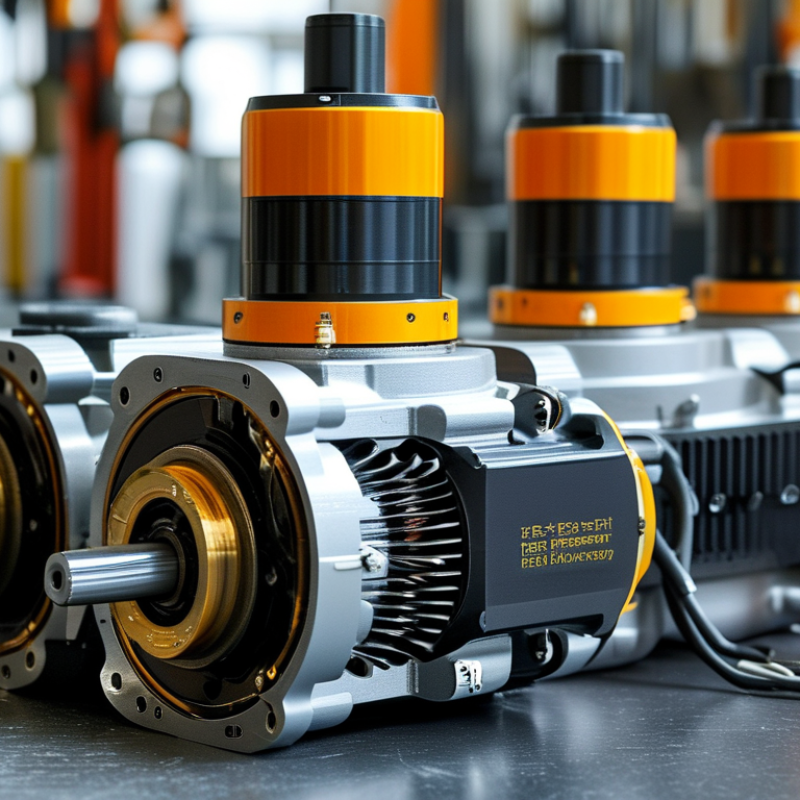
A torque motor is a brushless electric motor designed to produce high torque at low rotational speed. Unlike a conventional motor with a gearbox, it drives the load directly. Its stator creates a rotating magnetic field, while permanent magnets on the rotor follow that field. An encoder reports the rotor position to the drive, allowing accurate speed, angle, and torque control.
The motor’s large diameter helps generate torque. More active radius usually means greater turning force. High pole counts also support smooth operation at low speed. This makes torque motors useful in rotary tables, robotic joints, semiconductor equipment, and precision inspection systems. The construction is simple in theory. Real installations are less tidy. Heat still matters. Continuous torque can be far lower than peak torque, especially inside a sealed machine. Engineers should check winding temperature, cooling method, bearing load, and duty cycle before selecting a motor.
A reliable manufacturer should provide torque curves, thermal data, encoder compatibility, tolerance information, and lifetime testing. Buyers can request sample test reports and verify performance under their own load conditions. Do not judge quality from rated torque alone. A motor may reach a high peak value briefly, yet struggle during constant operation. I have seen specifications look impressive until installation space limited cooling. That detail deserves more attention. Mechanical stiffness, cable routing, vibration, and control tuning can also change the final result.
Key Features to Compare Among Torque Motor Manufacturers
When comparing torque motor manufacturers, start with application data rather than impressive catalog numbers. Continuous torque, peak torque, speed, and duty cycle must match the real machine. A rotary table running eight hours daily needs different thermal performance than an intermittent positioning axis. Ask for torque-speed curves at your target voltage and temperature. Peak torque alone can hide serious limitations. That detail matters.
Examine the motor’s thermal path, winding insulation, bearing design, and cooling method. A compact housing may save space, yet it can also trap heat near sensitive feedback devices. Check torque ripple, positional accuracy, encoder resolution, and allowable axial loads. Request test conditions, not only headline specifications. Measurements at room temperature may not represent a production floor reaching 40°C. Small differences become expensive over time.
Reliability also depends on documentation and engineering support. Look for clear installation drawings, tolerance data, maintenance guidance, and realistic delivery information. Ask how each manufacturer handles sample testing, failure analysis, and replacement parts. A supplier that explains limits openly is often more dependable than one offering perfect figures. However, no comparison is flawless. Buyers can still overlook cable routing, mounting stiffness, or software compatibility. I would test a representative unit under actual loads before approving a large purchase.
Leading Torque Motor Manufacturers for Global Buyers
Leading Torque Motor Manufacturers for Global Buyers
Leading torque motor manufacturers serve demanding applications in robotics, machine tools, semiconductor equipment, and packaging systems. Their products must deliver steady torque, accurate positioning, and reliable operation under continuous loads. A useful evaluation begins with the motor’s continuous torque, peak torque, speed range, winding options, and cooling method. Do not trust a headline specification alone. Details matter.
Experienced manufacturers provide clear test conditions, dimensional drawings, efficiency data, and feedback compatibility. They should explain how torque changes with temperature, duty cycle, and installation accuracy. Global buyers also need documented quality procedures, traceability, export support, and service response times. Ask for sample inspection records and realistic delivery schedules. Measure twice.
I have seen projects delayed because a motor fit mechanically but overheated during repeated acceleration. That mistake taught me to review thermal calculations before approving a supplier. A strong manufacturer should support sizing through load profiles, inertia data, and braking requirements. Certification may also vary by destination, so compliance documents must match the target market. No shortlist is flawless. Even reputable suppliers can provide incomplete answers, and buyers should challenge unclear assumptions before placing an order.
How to Evaluate Torque Motor Quality, Support, and Certification
Top Torque Motor Manufacturers for Global Buyers?
When evaluating a torque motor, start with measured performance, not brochure promises. Ask for continuous and peak torque curves, thermal test conditions, speed limits, and duty-cycle data. A reliable supplier should explain how winding temperature was measured, including ambient temperature and cooling method. Check cogging torque, encoder resolution, radial runout, vibration, and acoustic noise. These details affect positioning accuracy on real production lines.
Quality evidence should be traceable. Request inspection records, serial-number tracking, sample test reports, and a clear process for handling failures. During a factory assessment, observe winding insulation tests and rotor balancing. I once trusted a clean specification sheet too quickly; the supplied motor performed differently under continuous load. That experience still shapes my review process.
Support matters after the purchase. Evaluate engineering response times, installation guidance, firmware or drive compatibility, spare-part availability, and repair procedures. Ask whether technical support covers your time zone and language. Certification also needs careful checking. Confirm applicable marks, safety reports, electromagnetic compatibility testing, and material declarations for the destination market. Do not accept a logo image alone; request certificate numbers, issuing laboratories, and matching model details. Requirements can vary by country, and certification may cover only a specific motor configuration. A supplier that answers difficult questions clearly is often more dependable than one offering the lowest initial price.
Top Torque Motor Manufacturers for Global Buyers?
How to Evaluate Torque Motor Quality, Support, and Certification
This 100-point procurement model helps global buyers compare torque motor suppliers without relying on brand reputation alone. Torque performance, thermal efficiency, reliability testing, certification, technical support, and documentation should all be verified through datasheets, test reports, certificates, and sample evaluation.
The percentages are a transparent baseline for supplier assessment, not market-share data or ratings for any specific manufacturer.
Conclusion
A Torque Motor is a direct-drive motor designed to produce high torque at low speeds without requiring a separate gearbox. Its large diameter, compact structure, and precise rotation make it suitable for applications such as robotics, automation equipment, rotary tables, semiconductor machinery, and other systems requiring smooth, accurate motion. When comparing Torque Motor manufacturers, global buyers should examine torque density, speed range, positioning accuracy, thermal performance, operating life, customization options, and compatibility with control systems.
A reliable supplier should provide clear technical documentation, consistent manufacturing quality, responsive engineering support, and appropriate testing procedures. Buyers should also verify certifications, production standards, warranty terms, delivery capability, and after-sales service before making a decision. The best supplier is not necessarily the one offering the lowest price, but the one that can deliver stable performance, dependable quality, and long-term support for the specific application. Careful evaluation of technical requirements and total ownership costs will help buyers select a suitable Torque Motor solution with confidence.
